


Buffalo, Wright County
Buffalo Water Damage Help Near Buffalo Lake
We clean and dry Buffalo homes after leaks, overflows, storms, frozen lines, and sewage backups. ZIP 55313 has 132 recorded NFIP flood insurance claims, including losses dated from 1978 to 2025.
We dry Buffalo homes after leaks, storms, frozen lines, and sewage backups.
- Serving 13 communities in 3 counties
- Call to set up a visit
- Covering 12 ZIP codes around Elk River
Working in Wright CountySt. MichaelMonticelloAlbertvilleBig LakeElk River
- Licensed & InsuredLicensed & Insured
- Satisfaction GuaranteedSatisfaction Guaranteed
- Residential water damage in Elk River and nearby townsResidential water damage
- From Buffalo to St. FrancisFrom Buffalo to St. Francis

Buffalo, Wright County
Buffalo Homes Need A Practical Water Plan
Homes reached by MN 25 and MN 55 include basements, lower levels, and older construction that can hold moisture below finished surfaces. Buffalo’s median home was built in 1993, while 32.3% of homes date before 1980. We inspect the source area, check hidden moisture, remove standing water, and choose drying equipment based on readings from your property. Our technicians also account for Buffalo Lake, Lake Pulaski, and the city’s limited aquifer when discussing lower-level water. We serve Buffalo homes directly, with emergency service and written findings that show what the work includes.
- Moisture mapping in affected rooms
- Extraction from carpet and pad
- Drying with air movers and dehumidifiers
- Documented moisture checks
Why people call us
Why Buffalo Details Matter On Site
Wright County has 145,270 residents, and Buffalo homes range from older properties to newer construction. The home itself, its setting, and its utilities determine our inspection plan.
We read the home, not a template
Buffalo’s median build year is 1993, and 32.3% of homes were built before 1980. We check how water moved through the specific structure before choosing equipment.
Lakes change the lower-level picture
Buffalo sits on Buffalo Lake and includes Lake Pulaski. That setting gives basement water a different context than an isolated indoor spill.
We use the roads Buffalo homeowners use
MN 25 and MN 55 are main routes into the city. Our team plans access around Buffalo streets and nearby service areas, including St. Michael and Monticello.
Local utilities inform the inspection
Buffalo has a city wastewater department and draws water from a limited aquifer. We ask about the source and inspect affected areas accordingly.
How we help
Buffalo Water Services Built Around The Property
Buffalo’s lakes, lower levels, older homes, and limited aquifer each create different inspection questions. We choose extraction, cleaning, and drying methods after seeing the affected property.
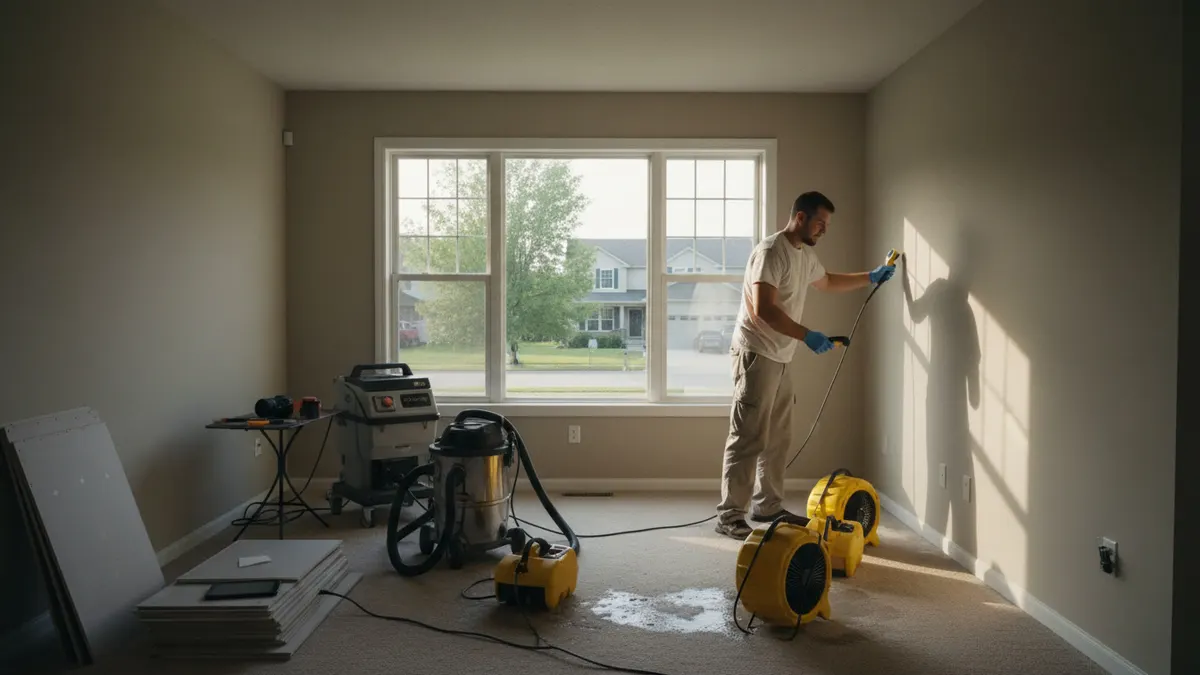
Water Damage Restoration
We inspect and dry Buffalo homes after indoor water losses, with the city’s mixed housing periods guiding moisture checks behind visible finishes.
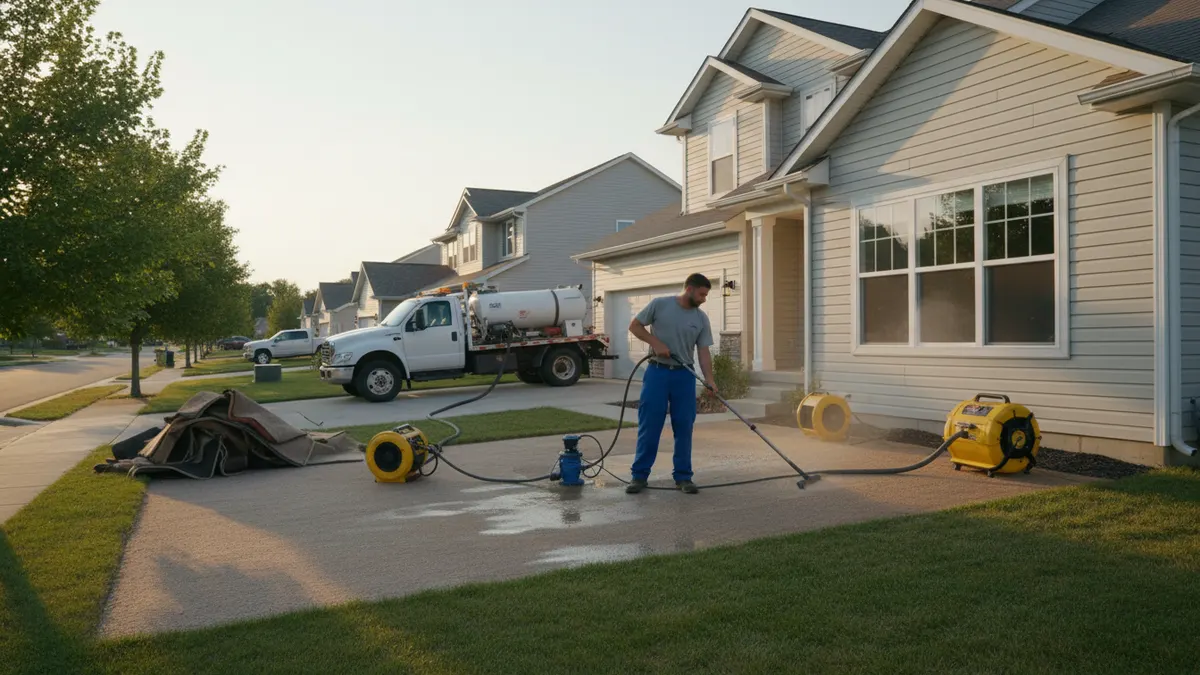
Emergency Water Extraction
For urgent standing water in Buffalo, we provide 24/7 extraction and place drying equipment after a spill, overflow, or storm reaches the home.
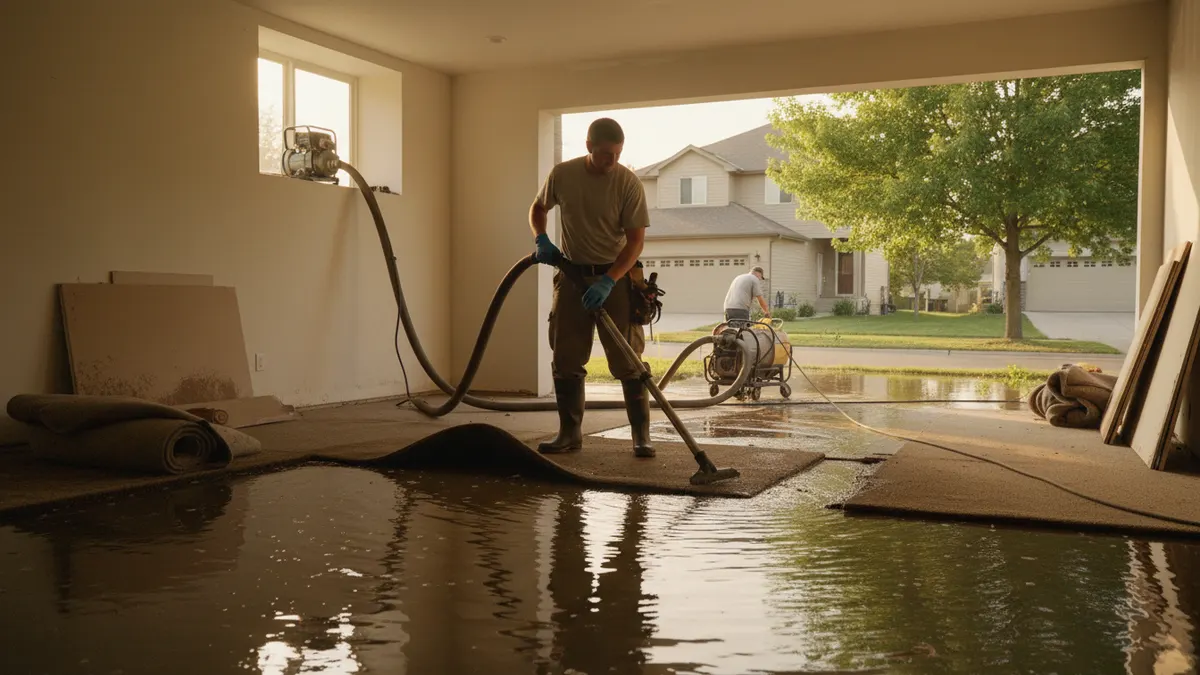
Flooded Basement Cleanup
Buffalo Lake and Lake Pulaski make lower-level conditions important; we pump, clean, disinfect, and dry basements after outside water enters.
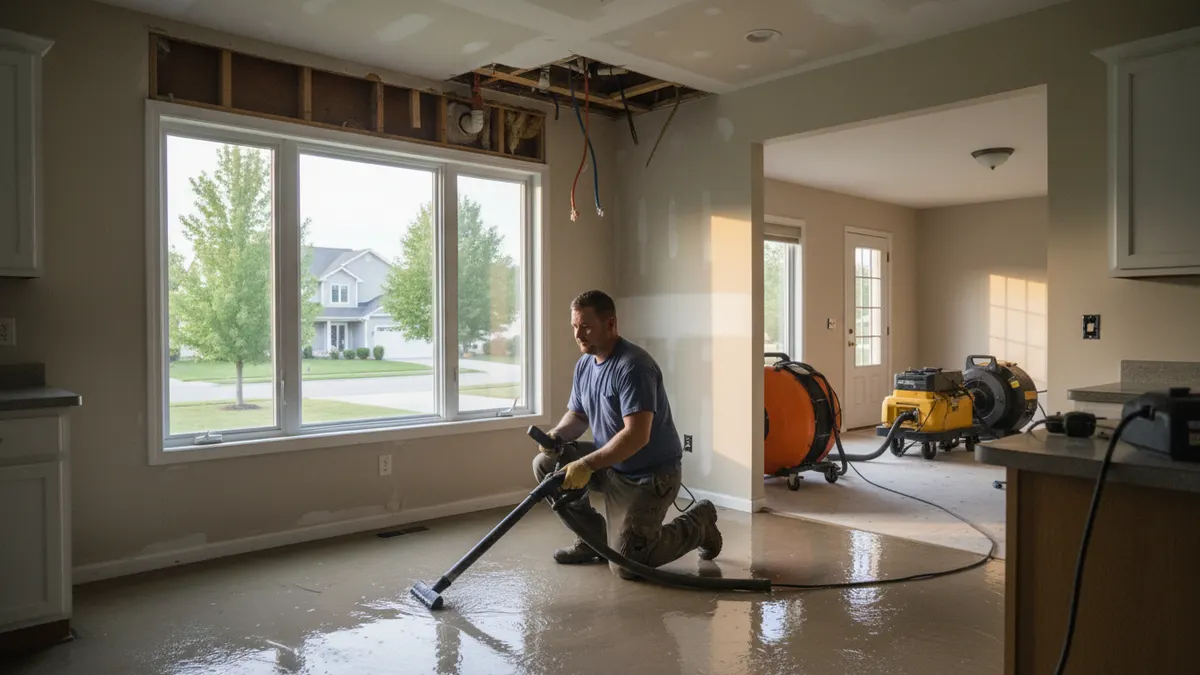
Burst and Frozen Pipe Water Damage
Cold January conditions near 12°F can accompany frozen-line losses, so we extract water, open wet areas for drying, and check moisture.
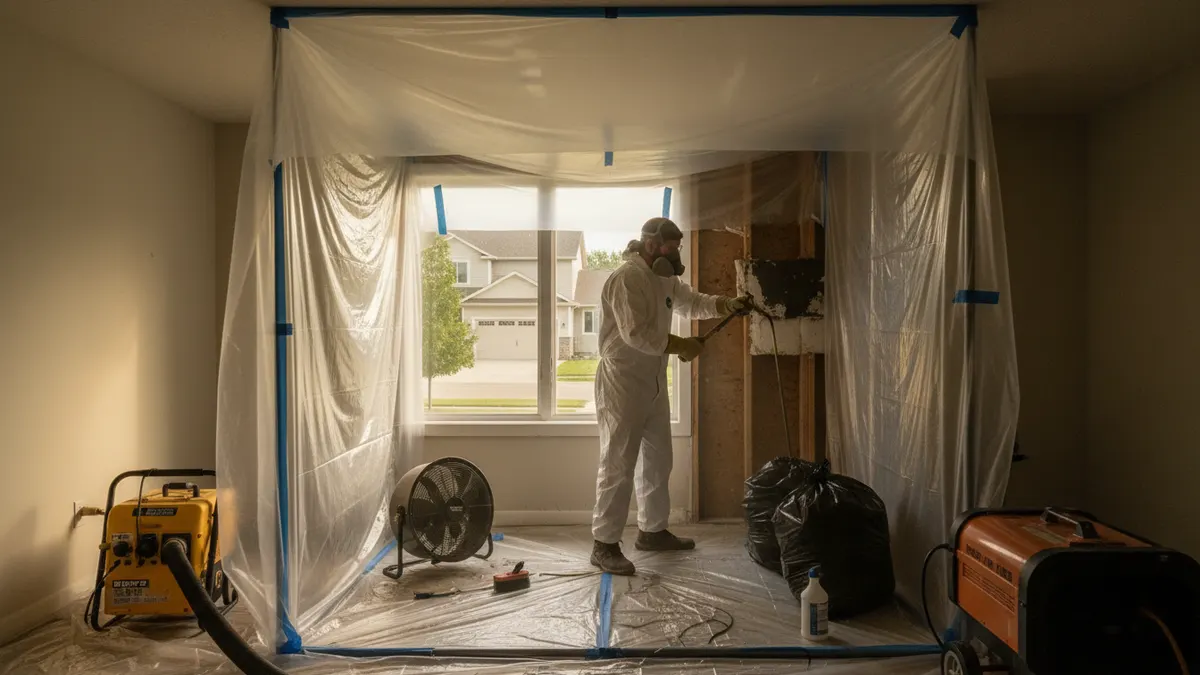
Mold Remediation
When water remains in Buffalo home materials, we contain mold, filter air, treat framing, and dry the area to limit renewed growth.
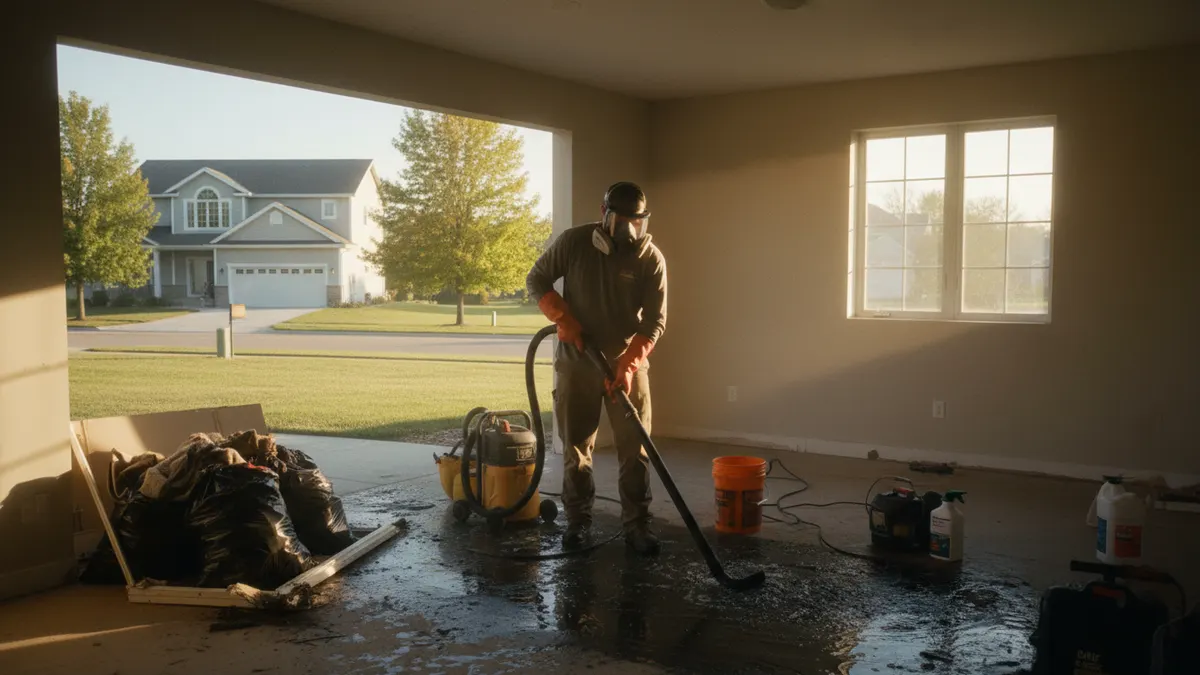
Sewage Backup Cleanup
A sewer backup calls for Category 3 procedures; we remove contaminated porous materials, disinfect affected spaces, and dry the property.


Step by step
Four Steps From Call To Dry Rooms
Our process begins with the conditions inside your Buffalo home. We document the source, affected materials, and moisture change rather than promise a fixed scope before inspection.
Step 1
Tell us what changed
We record the type of loss, the rooms involved, and any visible standing water so our Buffalo team can bring the right extraction and drying equipment.
Step 2
We inspect the affected areas
At the property, we trace moisture through floors, walls, ceilings, and lower levels. Buffalo homes near lakes may require a closer look at basement conditions.
Step 3
We remove water and set drying
Our technicians extract water, clean appropriate surfaces, and position air movers and dehumidifiers. We remove porous materials that cannot be dried safely.
Step 4
We verify the result
Moisture checks show whether drying is progressing. We explain remaining work and provide documentation tied to the readings and areas inspected.
What affects the price
What Shapes The Buffalo Work Scope
Buffalo-Hanover-Montrose Schools, Buffalo Community Middle School, and Buffalo High School serve a city with varied homes and neighborhoods. Those local landmarks do not set the charge. We price from the conditions our team documents at your property.
The water category
A clean indoor release, storm water, and sewage from a backup require different controls. Contamination affects cleaning, protective steps, and the materials we can handle.
Where water entered
A lower level near Buffalo Lake or Lake Pulaski may need a different inspection from a failed appliance line. Outside water can change how far we check.
Materials and room layout
Carpet, pad, finished spaces, wall cavities, ceilings, and basement areas each affect extraction and drying. Access inside your home also changes equipment placement.
Moisture beyond the surface
Water can move away from the first visible spot. Our technicians use inspection findings and readings to determine the rooms, materials, equipment, and monitoring the job requires.
Weather and utility context
Buffalo draws water from a limited aquifer, and the city wastewater department inspects and services sanitary lines. Those details help us understand the reported source, but property conditions control the scope.
We agree on the scope and the price with you before we start.
Around town
Buffalo Numbers With Job Meaning
These Buffalo measurements give context for cold, damp conditions and the homes our technicians enter. The actual scope still comes from readings at your property.
12°F
January average
A 12°F January average raises the chance of frozen-line water losses.
1993
Median year built
The 1993 median helps us anticipate varied materials and access conditions.
31.74 in
Precipitation a year
31.74 inches of annual precipitation adds context to basement moisture concerns.
80.9°F
July average high
An 80.9°F July average high can speed evaporation while leaving hidden moisture behind.
Sources: NOAA 1991-2020 climate normals, Buffalo 2NE station; U.S. Census Bureau, ACS 2023 5-year estimates
Good to know
Questions Buffalo Homeowners Bring Us
Which season keeps you busiest in Buffalo?
Winter losses can follow January conditions averaging 12°F, while rain and lake levels create other calls during the year. Buffalo also receives 31.74 inches of precipitation annually. We do not decide the work from the calendar. Our technicians inspect the affected rooms, measure moisture, and set the scope from what they find.
What happens after I contact your Buffalo team?
We begin by hearing what happened, where water appeared, and whether the source has stopped. At the property, our technicians inspect rooms, map moisture, identify materials affected, and explain the work. MN 25 and MN 55 help guide our travel into Buffalo, while the home determines the inspection details.
Which details change the cost of water work in Buffalo?
The work can change with the water source, contamination, room size, materials, moisture travel, and equipment needed. A sewage backup does not call for the same cleaning as a clean indoor release. Basement water near Buffalo Lake or Lake Pulaski may also require a broader inspection before we explain the scope.
Can my Buffalo home's construction affect the work?
It can. Buffalo has homes from different construction periods, and 32.3% of its homes were built before 1980. Older assemblies may give water different paths or make access different from a newer property. We do not assign the scope from age alone. Readings, visible conditions, and affected materials guide our decisions.
What should I do before our technicians arrive?
Tell us where water began, which rooms changed, and whether the source has stopped. Keep pathways clear when doing so is safe. Do not touch sewage or flood water. Buffalo is an NFIP community with a current effective FIRM date of June 20, 2024, but our visit still starts with conditions inside your home.
Our area
Find Your Buffalo Service Area
Use the map to check your street and town. We serve Buffalo and reach nearby St. Michael, Monticello, and Albertville, along with Rockford Township, Maple Lake Township, Marysville Township, Buffalo Township, and Chatham Township.
Local climate
Buffalo Moisture And Drying Conditions
The NOAA Buffalo 2NE station, 1.7 miles from Buffalo, records 31.74 inches of annual precipitation and a 12°F January average in the 1991-2020 normals. Rain, snow, and freezing conditions can each change how we approach extraction and drying.
A typical year
- January averageLows near 2.7°F
- 12°F
- July averageHighs near 80.9°F
- 71°F
- Heating degree daysPer year, base 65°F
- 8,211
- Cooling degree daysPer year, base 65°F
- 532
- PrecipitationRain and melted snow per year
- 31.74 in
- SnowfallAverage per year
- 39.8 in
NOAA 1991-2020 climate normals, Buffalo 2NE station, 1.7 miles from Buffalo.
This week in Buffalo
Live forecastStart With A Buffalo Home Inspection
Call our Buffalo team to examine the affected rooms, explain the drying scope, and set out the work your home actually needs.
Speak with our team
(763) 297-5013Service area
Elk River, MN 55330